
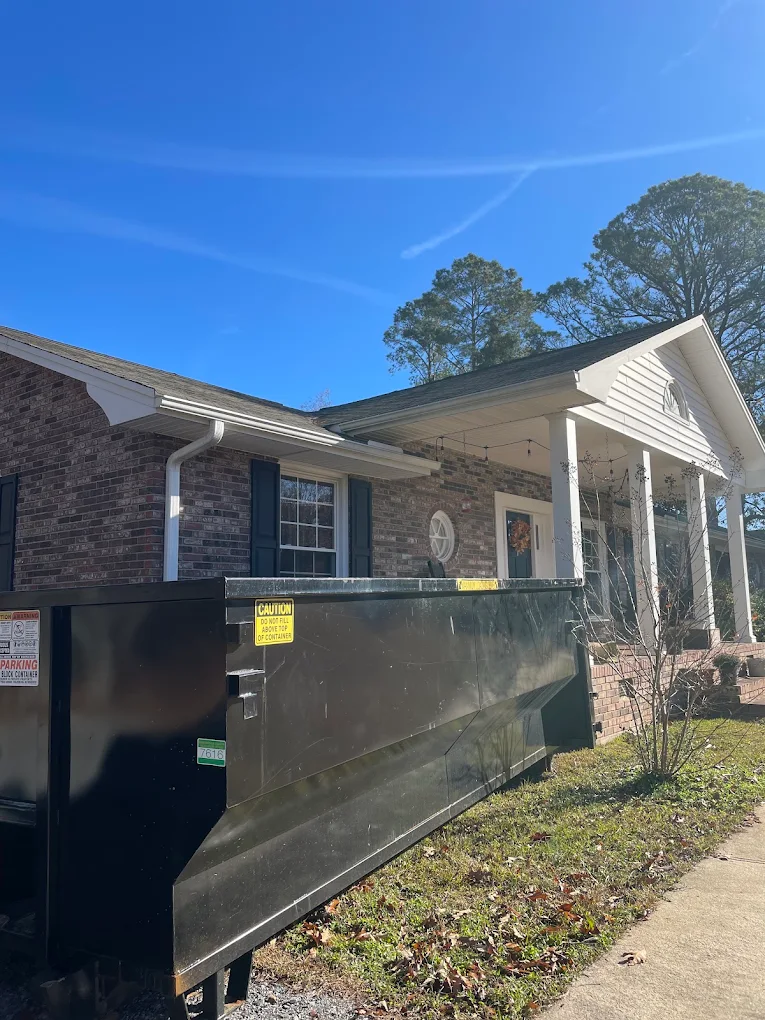
A good chunk of our renovation work happens within a mile of water. Lake Greenwood places from Ninety Six up to Cross Hill, Lake Russell camps out past Calhoun Falls, and lately the Savannah Lakes side of Lake Thurmond. Lake houses renovate on their own rhythm, and the dumpster logistics have their own quirks. Here's what those jobs have taught us.
The Driveway Is the Puzzle
Lake lots slope. That's the whole reason the view works, and it's also why can placement takes an extra minute of thought. A roll-off wants to sit reasonably flat, and on a steep gravel drive that usually means finding the one level shelf, often up by the road rather than down by the house.
When you order, describe the drive honestly: how steep, how tight the turnaround, gravel or concrete, and what the overhead looks like coming in. Trees are the other lake-lot signature, and a canopy that shades the porch beautifully can also block a truck bed mid-tilt. A texted photo of the drive answers most of it in one look. Down-slope placements have one more rule: the dumpster's nose points where the truck can pull it, so placement is a conversation, not a guess.
Time It Around the Season
Lake places get renovated in the off-season, and there's wisdom in that beyond the obvious. Fall and winter scheduling is easier for everyone, contractors included, and a dumpster sitting in the drive for two weeks bothers nobody when the cove is quiet. If you're planning kitchen or porch work on a rental property, the math is even simpler: renovate when the booking calendar is empty, and the 14-day rental covers most projects with room to spare.
What Comes Out of a Lake House
Lake renovations skew toward the same debris: decking and railing boards, paneling, old kitchen guts, water-tired flooring, and porch furniture past saving. Mostly bulky, moderately heavy, which is why the 20-yard is the usual can. Dock lumber and railing from work around the shoreline rides fine too. What can't ride, for now, is concrete, so old footings and pavers need their own plan until our bigger trucks arrive.
One lake-specific tip: wind. An open dumpster near open water catches gusts that a town driveway never sees, and light debris migrates. Tarp it or weight the light layers with heavier debris, and the cove stays clean and the neighbors stay friendly.
We run the lake roads every week from both our lots, and the Cross Hill, Ninety Six, and McCormick pages cover those corners in detail. Planning an off-season project? Call (864) 871-4290 and we'll talk through the drive before anything rolls.